|
|
Welcome to our Monthly Newsletter!Welcome to the seventeenth issue of our monthly newsletter! We are thrilled to be sharing what we are doing at the Athens-Clarke County Sustainability Department with you. Join us each month as we explore all things sustainability and how you can get involved! In this newsletter you will find: Latest projects, free resources, and upcoming events!
|
|
|
|
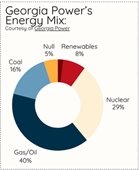
Public Service CommissionElection: November 4, 2025If you’ve opened your electricity bill lately and thought “This can’t be right,” you’re not alone. Across Georgia, energy costs have been climbing; driven by factors like high natural-gas prices, major infrastructure projects, and decisions made far from the dinner table. The good news? Now you have a chance to make your voice heard. On November 4, 2025, Georgians will vote in a pivotal election for two seats on the PSC.
The Georgia Public Service Commission (PSC) regulates electric utilities, natural-gas services and telecommunications in the state. They are the government body that holds the key to your electric bill, the state’s energy mix, and the path to clean power. On its website the agency states:
“In fact, very few governmental agencies have as much impact on peoples’ lives as does the PSC.” In practice, the PSC sets profit limits for big utilities like Georgia Power, approves their long-term plans, and determines how projects and costs get passed along to customers. For example, over the summer, Commissioner Bubba McDonald raised concerns about the current power-rates extension from Georgia Power, saying the utility’s profits had been set too high. However, there was not enough support so the power rates remained the same.
This isn’t just another race. It is the race that can help determine whether Georgia will be locked into higher bills or unlock a cleaner, more affordable energy future.
Despite being a pivot election, the PSC elections tend to see very low turnout, which means voters like you can tip the balance. For example, fewer than 200,000 Georgians cast ballots in the June primary. Yet these commissioners serve long terms. Tim Echols, for example, has been in office since 2011. That means you’re choosing someone who may set your electricity rate for years or even decades.
This year, seats for District 2 and District 3 of the PSC are up for election statewide. Regardless if you live in those districts or not, all registered Georgia voters can vote for both seats.
So please: go vote. Mark your calendar. Tell someone else to vote. Make this PSC election matter.
Check your voter registration information on the GA My Voter Page: https://mvp.sos.ga.gov/s/
For more details on how to vote in person, go to: https://georgia.gov/vote-in-person-election-day For sources, click here!
|
|
|
|
ACCGov's Newest Additions!Sustainability Department welcomes two new members!
|
|
|
|
|
|
Riley JamesProgram Support Specialist Riley James took the scenic route to renewable energy. With a background in fashion and a flair for creative problem-solving, Riley made the bold leap from runways to power lines, trading fabric swatches for circuit boards in pursuit of a more sustainable future. She’s currently studying Electrical Engineering at the University of Georgia, where she’s channeling her passion for climate action into practical, systems-level solutions. Before diving into the world of kilowatts and climate models, Riley lived in a school bus she converted into a fully off-grid mobile home; solar panels, composting toilet, the whole nine yards. That hands-on experience with sustainable living fuels her belief that the best solutions are holistic, human-centered, and just a little bit unconventional. |
|
|
|
|
|
Tishia McRaeGrants & Community Impact Coordinator Tishia’s work centers on connection and community. She holds degrees in Education and Public Management from Georgia State University and the College of Coastal Georgia, respectively, and has spent her career weaving together K–12 schools, higher education, nonprofits, and local government to strengthen partnerships and manage complex funding programs that serve citizens. As Grants and Community Impact Coordinator for the Athens-Clarke County Sustainability Department, she emphasizes collaboration and a shared sense of purpose. A favorite example of this was the BIRDEE intensive, which brought together faculty and alumni from UGA and Georgia Tech to mentor high school students in biologically inspired design—proving that Dawgs and Jackets can, in fact, work well together, at least off the football field. |
|
|
|
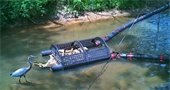 A Bandalong Badnit trash trap
Photo Credit: Storm Water Systems |
Athens Expands Trash Trap Initiative to Protect Local WaterwaysBy Tishia McRae
We are excited to announce new funding received to expand the community’s trash trap initiative. Trash traps are an innovative effort to reduce litter and plastics in our local streams and rivers. Funding for this project was provided by Georgia Rivers, whose statewide support helps local governments and organizations reduce aquatic trash and restore healthy waterways. In addition to this grant, Storm Water Systems, Inc. generously provided an in-kind donation to help make this project possible. Their Bandit-style trash traps are specifically designed for medium-sized streams, capturing debris before it enters larger waterways. Athens’ first trash trap was installed on Trail Creek in 2020 through a partnership between Georgia Rivers, Storm Water Systems, and the University of Georgia. That pilot effort has since resulted in more traps being installed, and the removal than 1000 pounds of trash from Athens’ waterways. The new traps will expand the program to other sites, increasing the reach and visibility of our local litter reduction efforts. “These partnerships demonstrate how collaboration between local government, nonprofits, and private industry can make a tangible impact on water quality,” said Mike Wharton, Director of Sustainability. The Sustainability Department will coordinate with multiple ACCGov divisions and community volunteers to maintain the traps, collect and catalog debris, and share data with partners. The results will help guide future source-reduction campaigns aimed at eliminating litter at its origin. Together, these efforts advance Athens-Clarke County’s Zero Waste and Clean and Renewable Energy Plan goals, keeping our rivers cleaner, our ecosystems healthier, and our community more resilient.
|
|
|
|
Invasive Species of the MonthKudzu: The Vine That Took Over the SouthBy Christian Snead
|
|
|
|
|
|
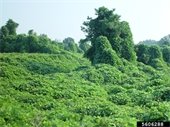 Kudzu Infestation Photo Credit: Gerald Holmes, bugwood.org |
|
|
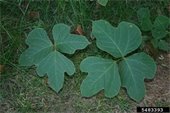 Kudzu Leaves Photo Credit: Leslie J. Mehrhoff, bugwood.org |
|
|
|
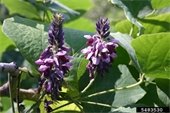
Kudzu is a fast-growing, woody vine that has become a familiar sight across the southeastern United States. Originally introduced from Japan in 1876 as an ornamental plant, it was later promoted as a forage crop and a solution for soil erosion during the Great Depression. By the 1940s, over a million acres had been planted—only for it to be declared a pest just a decade later. This climbing perennial vine can grow between 32 and 100 feet long, with stems reaching up to four inches in diameter. In ideal conditions, it can grow as much as a foot per day and weigh up to 400 pounds. Its large leaves block sunlight from native plants, and its aggressive growth can smother trees, break branches, and even uproot them. Kudzu thrives in warm, sunny areas with mild winters and disturbed soil—like forest edges and open fields. While it’s most common along the East Coast, sightings have been reported as far away as North Dakota and Oregon. Each kudzu plant can produce up to 30 vines from a single taproot, which may grow over six feet long and seven inches wide. The leaves grow in clusters of three, and in late summer, the vine produces fragrant purple flowers followed by flat seed pods. Kudzu spreads mainly through underground rhizomes and aboveground runners, but it can also reproduce by seed if pollinated by the giant resin bee. Efforts to control kudzu have had mixed success. Between 2009 and 2013, the kudzu bug (Megacopta cribraria) helped slow its spread by feeding on the plant. However, a parasitic wasp later reduced kudzu bug populations, allowing the vine to reclaim over 2,000 acres by 2019. Fall is the most effective time of year to treat kudzu, but its removal is a long-term challenge and definitely not a one and done situation. While you can work on reducing kudzu mechanically, herbicide treatment is by and far the most effective way. First cut the vines a few feet above the ground to kill the upper growth. Then apply an herbicide such as glyphosate or triclopyr directly to the freshly cut stem base. Always follow the product label instructions for mixing, application and safety procedure when using herbicides. For sources, click here! |
|
|
|
|
|
This Month's Topic:Leave the LeavesBy Riley James
Fall in Athens means cooler temps, cozy sweaters, and a sudden urge to rake every leaf in sight. But before you go full leaf-blower mode, here’s a radical idea: don’t.
Leaving the leaves where they fall isn’t laziness — it’s ecological brilliance. Fallen leaves act as natural mulch, helping regulate soil temperature, retain moisture, and protect plant roots from Georgia’s famously unpredictable weather. They also suppress weeds, fertilize the soil, and prevent erosion — all while saving you a trip to the garden center.
But the benefits don’t stop at your flower beds. Leaves create essential habitat for pollinators, insects, and other wildlife, many of which are in decline. Think of it as a cozy Airbnb for butterflies, beetles, and the occasional toad. Plus, as leaves break down, they return organic matter to the soil — reducing the need for synthetic fertilizers and keeping your yard’s ecosystem in balance.
And here’s a stat to rake in: according to the EPA, yard debris like leaves makes up over 13% of the nation’s solid waste — that’s 33 million tons a year. When sent to landfills, this organic matter can’t decompose properly and ends up releasing methane, a potent greenhouse gas. Not exactly the fall vibe we’re going for.
What You Can Do:
- Leave the leaves where they fall — especially in garden beds, under trees, or in out-of-the-way corners.
- Mulch them in place with a mower to help them break down faster.
- Add them to your compost for a nutrient-rich mix.
- Use them between growing seasons to keep soil covered and healthy.
So this fall, skip the bags and blowers. Let the leaves do what they do best: support life, enrich soil, and make your yard look effortlessly wild (in the best way).
|
|
|
|
The Eco ShelfWelcome to The Eco Shelf! Let this new section of our newsletter be your monthly excuse to curl up with a good read and further your climate action education. Each issue, we’ll spotlight a book that dives into sustainability, the environment, or the wild world of green innovation. Whether you're into science, storytelling, or just want to sound smart at your next potluck, we’ve got you covered. |
|
|
|
|
|
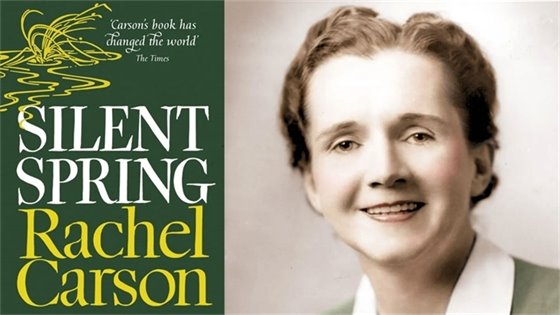
Silent SpringBy Rachel Carson Our first book recommendation is very special - Silent Spring by Rachel Carson. First published in 1962, this book sparked a shift in public consciousness, inspiring a global environmental movement that influenced policy, science, and activism. This groundbreaking work didn’t just challenge the status quo, it changed it; leading to the creation of the US Environmental Protection Agency. More than sixty years after its publication, Silent Spring remains a cornerstone in the conversation around environmental protection. Its impact permanently reshaped how we think about the relationship between human activity and the natural world. Carson's writing is both poetic and powerful, weaving scientific insight with a deep sense of moral responsibility. Without overwhelming the reader with jargon or alarmism, she raises profound questions about how we interact with the ecosystems we depend on. Silent Spring offers not only historical perspective but also an urgent relevance today. It invites us to reflect, to question, and to act. I encourage everyone to read Silent Spring and discover for themselves why this book is still regarded as one of the most influential environmental texts of all time.
Recommended by Riley James |
|
|
|
|
|
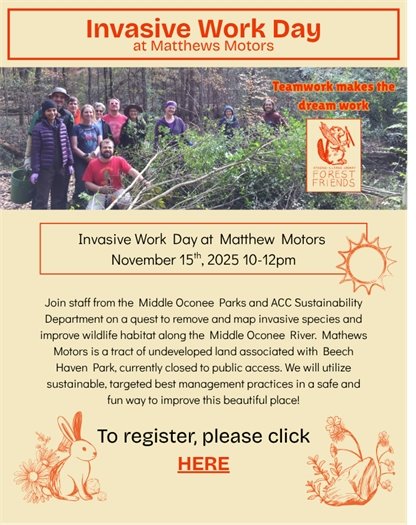
*******************************************************************Invasive Work DayNovember 15, 10-12pm |
|
|
|
|
|
*******************************************************************Public Service Commission ElectionNovember 4, 7am-7pm |
|
|
|
|
|
*******************************************************************America Recycles DayNovember 15 |
|
|
|
|
|
****************************************
|
|
|
|
Putting Energy Into Greener SpacesAthens-Clarke County Sustainability Department www.accgov.com/green 706-613-3838 |
|
|
|
|
|





 Share on Facebook
 Share on Twitter
 Share via Email
