Issue #3 July 2024 Sustainability Department
Click here for the standard format version of our newsletter or continue reading for the accessibility-enhanced version of our newsletter.

Welcome to our Monthly Newsletter!

Welcome to the third issue of our monthly newsletter! We are excited to announce that we are officially a department! We are thrilled be able to continue to share what Athens-Clarke County Sustainability is doing with you. Join us each month as we explore all things sustainability and how you can get involved!

In this newsletter you will find: Latest projects, free resources, and upcoming events!

Tips for a Greener Lifestyle!

In this series we explore how we can be sustainable together, right here in Athens-Clarke County! 

This Month's Topic: 

Recycling 102: Why is Recycling so Hard?

Joe Dunlop, ACC Waste Reduction Administrator

        The recycling industry doesn’t make it easy. For recycling educators, our world is filled with exceptions, asterisks and fine print.

        Fortunately, you don’t have to be an expert to improve your recycling etiquette, and chances are you’re not recycling 100% correctly all the time.

        In this column I’ll bust some myths, explain some of the reason for the confusion, and get you back on track with a few simple, asterisk-proof guidelines.

Myth #1: ‘Why bother, it all goes in the trash anyways.’

        “If I help my neighbor follow the rules, I’ll ensure none of the recycling is trashed.” There – fixed it for you. Recyclable materials DO get recycled, IF they are placed on the correct path. Modern American recycling is weird, and that holds in Athens too. Private companies, even huge corporations, depend on the local collection of recyclables. Those local collections are often done at local governments’ expense, and rely on local government staff to get it done correctly.

        One mistake doesn’t send the entire truckload of recyclable material to the landfill, but too many mistakes will slow down the entire process, and some mistakes render nearby recyclables unrecoverable (think nacho cheese snuggled against magazines in the truck… in July). When truckloads exceed 25% contamination (stuff that shouldn’t be included in mixed recyclables, like plastic bags and Styrofoam) those loads are packed up and sent to the landfill. This is rare.

Myth #2: ‘If my recyclables are so valuable, why don’t I get paid for them? Worse, why do I have to pay to get them collected?’

        Your spent bottles, cans and paper aren’t worth very much at all. Sorry folks. But once they are separated from each other and added together with like materials, their value skyrockets. 

        Currently, cardboard is selling for approximately $108 per ton. But that is for bales or bricks the size of a home refrigerator. And we only get that top bulk pricing if there are 20 tons of those bricks loaded onto a single tractor-trailer truck.     Oh, and nothing but cardboard – if more than 3% of the total weight is anything other than cardboard, the price drops. That includes the metal wires holding the bales together. See why we get cranky about Styrofoam left in the boxes?

        Like a lot of services, the expensive part is getting a truck to your home or place of work and paying the driver a living wage to do so.

Myth #3: ‘I don’t know if this thing is recyclable or not, but if I just include it in my cart, they’ll figure it out.’

        Wrong! The people who work in the recycling facility are on their feet 10 hours a day, sorting through 70+ tons per day of miscellaneous packaging zooming past them on conveyor belts. They don’t have time to inspect each item – they are trying to hit the industry standard of 50+ picks per minute. They get a lot of help from machinery, but on any given day there are a dozen sets of backs, brains and hands hard at work inside the recycling facility in Athens.

        With that last one in mind, recycling in Athens has shifted over the last decade from ‘Recycle More!’ to ‘Recycle Right!’ Now the mantra is ‘If in Doubt, Throw it Out!’ in an effort to protect what has been properly recycled. That shift is due mostly to (wait for it….) money.

        All of that packaging you place in your recycling cart or dumpster enters the commodity market, meaning the prices fluctuate. That $108 ton of cardboard described above was only selling for $48 this time last year. Local government education efforts don’t have enough funding to chase market price fluctuations. Instead, we try to keep it as simple as possible:

“Place clean, empty containers, paper and empty, flattened cardboard in your recycling cart.”

        That guidance will cover about 70% of what can be recycled in Athens. To learn more about the rest, visit www.accgov.com/recycling.

Special thanks to the ACC Solid Waste department!

Click here to learn more about ACC Solid waste!
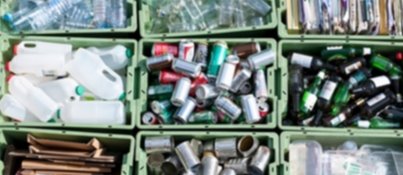
Image of recycling materials in bins
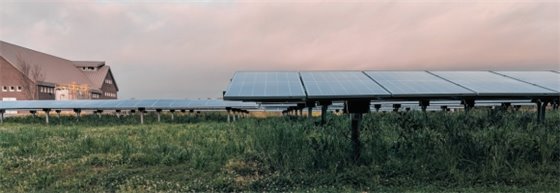
Pink grey clouds cover the horizon on a calm early evening at Cedar Creek Water Reclamation Facility. The picture shows a field of blue solar panels on a rich dark green field with part of the facility building in view.

The Scope of Energy in ACC

Hannah Chaffee

        In 2022 thanks to 100% Athens and the community’s efforts to demonstrate the necessity of a clean energy transition, Athens-Clarke County Sustainability published the Clean and Renewable Energy Plan. The Clean and Renewable Energy Plan serves as a guidebook to achieving a local, equitable clean energy transition while reducing greenhouse gas emissions. 

         The central goals of the plan are to 1) achieve 100% clean and renewable electricity for all municipal properties, government operations, and community-wide buildings by 2035 and to 2) meet the community’s electricity demand with 100% clean and renewable electricity by 2050. 

        There are plenty of reasons to transition to clean renewable energy but the largest driving factor is reducing emissions to slow the rate of global warming and improving air quality. The Clean and Renewable Energy goals can be understood in terms of scope emissions. Scope Emissions refer to greenhouse gases released, and they can be distinguished into different categories.

Scope 1

These emissions produced by sources that a organization directly owns or controls. For Athens-Clarke County this is means emissions from facilities and government owned transportation. 

Scope 2

Scope 2 emissions are indirectly controlled; these are emissions associated with energy use. ACC primarily get its energy from GA Power. Only 7% of GA Power’s energy is produced by renewable energy sources. GA Power is regulated by the Georgia Public Service Commission (PSC) which consists of 5 state-wide elected officials. While ACC cannot control the energy sources of the power companies, we can lobby the PSC to mandate GA Power support private investment of renewable energy while providing more of their own renewable energy sources.

Scope 3

Scope 3 emissions include everything that is up or down the supply chain of an organization. An organization is indirectly responsible for Scope 3 emissions. These can include emissions associated with purchased goods or for organizations that produce a physical product, Scope 3 emissions are the result of how their product is used and disposed of by the consumer.

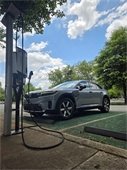
Shot from close to the ground, a grey Honda Prologue charges at the ACC public EV charger at Park and Ride. There are trees and a blue sky with white clouds.

Photo credit: Hannah Chaffee ACCGov EV Charger at Lexington Rd Park and Ride

       Athens-Clarke County Sustainability is currently working to cut emissions on several fronts, focusing on Scope 1 and 2 in order to reach the 100% clean and renewable energy goals for government operations. These efforts include investing in electric vehicles (EVs) within the ACC fleet and public EV charging infrastructure which is severely lacking in Athens.  

        Athens-Clarke County has installed many renewable energy sources to reduce Scope 2 emissions including ground source (geothermal) heat pumps at the Solid Waste, Sandy Creek, and Animal Services buildings, solar at the Transportation and Public Works’ Streets and Drainage Campus, the Cedar Creek Water Reclamation Facility, Fire Station 2, and the Cooperative Extension building. ACC also has a Gas Capture system at the landfill which turns gas that would otherwise be released into energy. This year ACC is implementing three additional solar projects. These initiatives don’t just reduce emissions: they also save money. While renewable energy is crucial for creating a sustainable community, energy efficiency and conservation efforts give you ‘more bounce for your ounce’ when it comes to reducing emissions which is why the ACC Sustainability Department is implementing an energy management system to track and improve internal energy use. 

        The goal is to lead as an example while also providing sustainability support to the community. In the near term, ACC Sustainability is looking to install many public facing EV chargers and provide resources to reduce household energy use. Reducing emissions is not a straight forward task, but Athens-Clarke County is determined to responsibly manage our environmental impact. 

Learn more about the ACC Sustainability efforts on our website! 

www.accgov.com/green

Back of young woman in woods wearing pesticide backpack sprayer.

We are Hiring!

Habitat Management Technicians

This position provides technical support for the management of natural lands in Athens-Clarke County with an emphasis on invasive plant management and habitat rehabilitation. 


Job tasks include:

  • Chemical and mechanical removal of invasive plant species
  • Habitat restoration activities and monitoring
  • Supporting other Sustainability Department initiatives

Join our team!

Apply Online Here

Putting Energy into Greener Spaces

Athens-Clarke County Sustainability Department

www.accgov.com/green

706-613-3838  

Share on Facebook
Share on Twitter
Share via Email

Copyright 2024 - Athens-Clarke County Unified Government (ACCGov)
Athens-Clarke County Unified Government | P.O. Box 1868 | Athens, GA 30603

Powered by
CivicSend - A product of CivicPlus