How Heatwaves Impact our Waterways
Summer 2025 has seen record-breaking heat across the southeast, and Georgia has certainly felt its effects. In addition to being uncomfortable, excessively hot weather can be harmful to our local waterways. As climate change fuels more frequent and intense heatwaves, our stormwater systems, and environment, are feeling the pressure in surprising ways.
During a heatwave, the sun bakes roads, rooftops, and parking lots, turning them into heat traps. When a sudden summer storm rolls in, rainwater rushes over these superheated surfaces, collecting not just oil and debris, but heat. This heated runoff flows into storm drains and, eventually, into our rivers and streams. This results in a sharp rise in stream temperatures, a phenomenon known as thermal pollution.
Even small temperature increases can have big consequences for aquatic life. Warmer water holds less oxygen, which can stress or even kill fish, insects, and other organisms that depend on cool, clean water to survive. When thermal spikes happen suddenly after a storm, the shock can be particularly deadly.
The good news, however, is that nature has a solution!
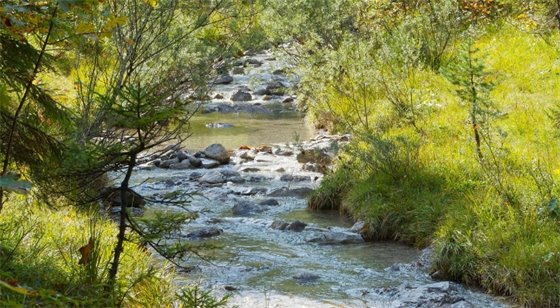
Trees and riparian buffers (the vegetated zones along waterways) help regulate stream temperatures in several ways:
- Shade from trees prevents direct sunlight from heating the water.
- Vegetation slows runoff, allowing rain to soak into the soil instead of racing across hot pavement and directly into our waterways.
- Roots help stabilize banks, reducing erosion and sediment that can cloud and warm the water.
You can help reduce thermal pollution by:
- Preserving or planting trees, especially near driveways, streets, and drainage areas.
- Avoiding hard surfaces where possible, and opting for permeable alternatives.
- Maintaining natural buffers along streams, ditches, and creeks on your property. Athens-Clarke County requires streams to be protected by 75 feet on both sides of the stream bank.
To learn more about thermal pollution, check out this article from Aqualis. For more information on ACC’s stream buffer ordinance, visit accgov.com/stormwater.



 Share on Facebook
 Share on Twitter
 Share via Email
