|
|
Welcome to our Monthly Newsletter!Welcome to the sixth issue of our monthly newsletter! We are thrilled be able to share what we are doing at the Athens-Clarke County Sustainability Department with you. Join us each month as we explore all things sustainability and how you can get involved! In this newsletter you will find: Latest projects, free resources, and upcoming events! |
|
|
|
Tips for a Greener Lifestyle!In this series we explore how we can be sustainable together, right here in Athens-Clarke County! This Month's Topic: The Gift of SustainabilityHannah Chaffee We've all experienced it: that 'Oh, you shouldn't have' gift. You really appreciate that your aunt even thought to get you something for the holidays ...but why did it have to be a light up neon jester hat? For some reason you do love it, but there are only so many occasions when a light up neon jester hat is appropriate, particularly one that jingles so ferociously with even the slightest tilt of your head. And you can’t get rid of it, because your aunt picked that hat out specifically for you. So it will sit, forgotten in the back of your closet, never to jingle or jangle again. We all want to express our gratitude for the people in our lives we love, but it can be easy to buy unappreciated and unsustainable gifts. Fellow aunts of the world, I come bearing good tiding —and alternatives! First, why not give the best gift of all — food (just make sure it’s food they actually like)! Or better yet, give the gift of experience. Get your loved one a gift card to the movies or a voucher for a massage. If you think they would be interested, plan some quality time around an experience. Take your nephew to the Renaissance Fair and put that jester hat to good use! Or why not give the gift of service: a subscription to a streaming or grocery delivery service. If your loved one also loves the planet, there are plenty of sustainable subscription services out there. Did you know that there are commercial compost pickup services right here in Athens? If you still want to give physical gift, try either useful or thoughtful and crafted or second-hand. Gifting can be a great chance to try that DIY you’ve been wanted to do or better yet, upcycle an old item! Whether its from a cool vintage store, that staple thrift shop or your attic, a well-loved gift can mean even more than something new. Sometimes the best gift can be as simple as heartfelt words: write a caring letter! There are so many sustainable ways to show people you appreciate them this holiday season. And you’ve got a lot of love to give, so get out there! And don’t forget, if you do get a metaphorical jester hat this year, don’t throw it out. Sell, regift or donate it; there’s someone out there who not only can pull it off but who will deeply appreciate you sending it their way! |
|
|
|
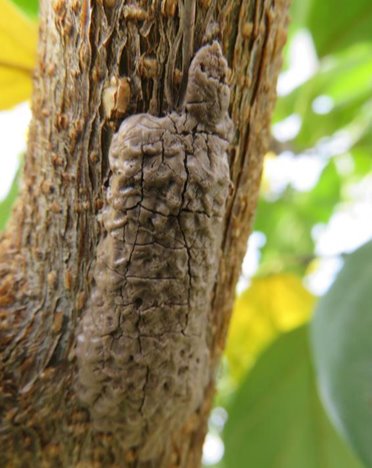 Photo Credit: Kenneth R. Law, Bugwood |
|
|
|
Invasive of the Month:Spotted Lanternfly & The Tree-of-HeavenBay Noland-Armstrong |
|
|
|
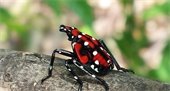 Photo Credits: Lawrence Barringer, Bugwood |
Speaking of unwanted presents, Georgia was recently ‘gifted’ the presence of the Spotted Lanternfly in Fulton County. This was the first documented occurrence of this highly invasive insect in the state. The Spotted Lanternfly is native to Asia and was accidentally brought to the U.S. in 2014. Many invasive species make their way to the United States only to be met with an unfamiliar habitat that they must adapt to. However, for the spotted lanternfly that isn’t the case. Its main host tree is the tree-of-heaven (Ailanthus altissima), which also just happens to be an unwanted invasive species present throughout much of the U.S. ich also just happens to be an unwanted invasive species present throughout much of the U.S.
|
|
|
|
Although the spotted lanternfly can feed on more than 70 species, tree-of-heaven is by far its most preferred. Because of this, locating and managing tree-of-heaven is vital to dealing with the spotted lanternfly and reducing its potential impacts. The more, the merrier! This month we decided to serve up a timely two for one special on these partners in ecological crime. Stay tuned to learn more about local invasive species! |
|
|
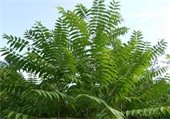 Photo Credit: Richard Gardner, Bugwood |
|
|
|
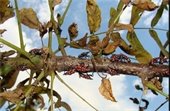 Photo Credit: Eric R. Day, Bugwood |
The Spotted LanternflyBay Noland-Armstrong The spotted lanternfly (Lycorma delicatula) is a plant hopper insect that is native to Asia and is thought to have been introduced to the United States in 2014. It feeds on the sap of a wide range of plants including grapes, fruit trees, and hardwoods, but the preferred host tree for adult lanternfly’s are the invasive —and prevalent— tree-of-heaven (Ailanthus altissima). The abundance of these trees in the United States allows for this insect to easily proliferate. Young lanternflies are small, flightless, and black with white spots. It is most common to see young lanternflies in the spring and summer, turning red with white spots before reaching adulthood in the fall. Adult spotted lanternflies are about an inch long and are capable of flight with their unique grey forewings and bright red hindwings, both of which are dotted with black spots.
|
|
|
|
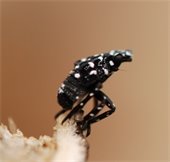 Photo Credit: Lawrence Barringer, Bugwood |
During the fall, female lanternflies lay their eggs on any hard surface they can find, whether that be on tree trunks, firewood, rocks, vehicles, outdoor furniture, fences, etc. After laying a cluster of 1-inch long egg cases that look like seeds, the female covers them with a grey putty-like substance that dries to resemble cracked mud. As Lanternflies eat, they secrete a sugary-sticky residue called honeydew. This honeydew may attract wasps, ants and other insects. It can also build up on surrounding surfaces and promote the growth of a black sooty mold. Since first being found in Pennsylvania in 2014, the spotted lanternfly has spread to 18 states. The first confirmed sighting of a spotted lanternfly in Georgia was found this October in Fulton County and confirmed by the Georgia Department of Agriculture (GDA) in November. It is unknown at this point if this was just a stowaway from another infected state or if there is an established population in Georgia. Either way, lanternflies’ feeding habits pose a serious threat to Georgia’s natural ecosystem and agriculture industry.
|
|
|
|
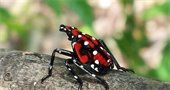 Photo Credit: Lawrence Barringer, Bugwood |
|
|
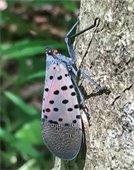 Photo Credit: Lawrence Barringer, Bugwood |
|
|
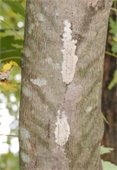 Photo Credit: Richard Gardner, Bugwood |
|
|
|
As far as predators go, Spotted Lanternflies’ native predators are not present in North America, however numerous species of birds, chickens, praying mantises, and wasps have been found consuming them, which could prove beneficial for their control. It is important to know what to do if you encounter a Spotted lanternfly: take a picture of it, kill it, and then report it to the GDA using this link: https://www.gainvasives.org/slf/report/ |
|
|
|
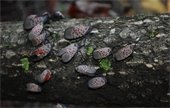 Photo Credit: Lawrence Barringer, Bugwood |
|
|
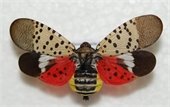 Photo Credit: Lawrence Barringer, Bugwood |
|
|
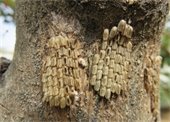 Photo Credit: Kenneth R. Law, Bugwood |
|
|
|
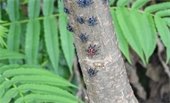 Photo Credit: Richard Gardner, Bugwood |
It is essential that any and all sightings are reported immediately after discovery and that the insects or egg cases are squashed. To further prevent the spread of this pest, regularly inspect plants and trees for signs of them, and if you are traveling from any infected states check your clothes, shoes, and vehicles to prevent moving the pest. Other hard items that spend time outdoors like firewood, bricks, and trailers should also be inspected thoroughly for eggs. Consider inspecting any tree-of-heaven trees you see as they are the most likely place to find lanternflies.
|
|
|
|
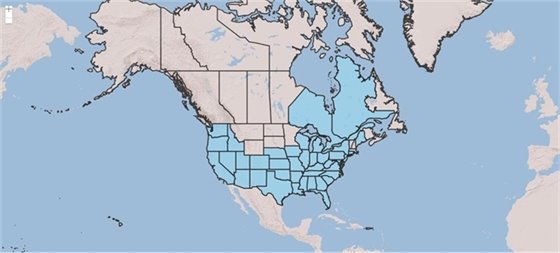
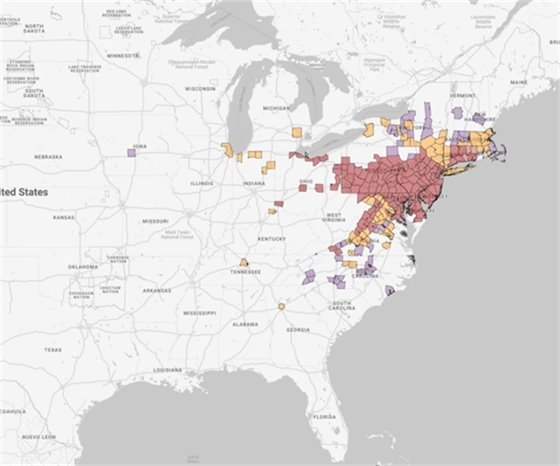 Current Distribution of Spotted Lanternfly within the United States by County (Cornell, New York State Integrated Pest Management) |
|
|
|
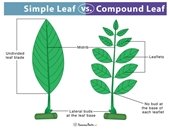
The Tree-of-HeavenImir Robinson Ailanthus altissima, commonly known as the tree-of-heaven, is a fast-growing deciduous tree native to China that matures at a height of 60 to 80 feet. Its compound leaves feature 10-40 lance-shaped leaflets, each with a distinctive gland at the base. When crushed, the leaflets and twigs emit a foul odor. Tree-of-heaven closely resembles native species like sumacs and black walnut trees, but the glands and its strong odor help distinguish it from these look-alikes. Introduced to the northeastern United States in the early 1800s and to the West Coast by the mid-1800s, tree-of-heaven became a popular ornamental shade tree due to its high tolerance for drought, pollution, and poor soil quality. This widespread use persisted until the early 1900s.
|
|
|
|
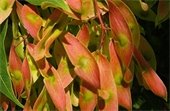 Photo Credit: Eric R. Day, Bugwood |
Unfortunately, the tree-of-heaven’s adaptability, rapid growth, and competitive nature have contributed to its widespread presence across the United States. It is now found in 43 states, including Georgia. Tree-of-heaven forms large clonal stands and spreads aggressively in disturbed forests, fields, and along roadsides. A single female tree can produce over 325,000 seeds annually. These seeds are contained within winged samaras—think helicopter seeds—that are easily dispersed by wind and rain over long distances.
|
|
|
|
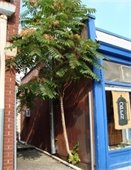 Photo Credit: Annemarie Smith, Bugwood |
Tree-of-heaven can spread even without producing seeds. It sends up root suckers at significant distances from the parent tree and readily produces stump and root sprouts when injured. This capability allows it to aggressively outcompete neighboring plants. Adding to its competitive edge, tree-of-heaven is allelopathic, meaning it releases chemicals, such as ailanthone, that inhibit the growth of nearby plants. Tree-of-heaven poses significant threats to both built and natural environments. Its aggressive root system can damage sewer lines, sidewalks, and building foundations. In natural ecosystems, its ability to outcompete native plants jeopardizes biodiversity. These issues are further compounded by its status as the preferred host for invasive species like the spotted lanternfly.
|
|
|
|
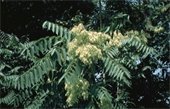 Photo Credit: David J. Moorhead, Bugwood |
One strategy to prevent the establishment of spotted lanternflies is to remove tree-of-heaven—but this is far easier said than done. To effectively control tree-of-heaven, treatments targeting the root system with a systemic herbicide should be conducted from late summer through fall, during the period when the tree is actively transporting nutrients to its roots. Herbicides can be applied directly to the bark using a basal bark treatment or through small cuts along the stem in a process known as the "hack-and-squirt" method. A follow-up treatment in the second year may be necessary to ensure complete control. Want to learn more? Penn State Extension offers excellent resources on managing tree-of-heaven. Check it out here: Penn State Extension – Tree-of-Heaven
|
|
|
|
|
|
|
|
EmPowering Athens:ACC Sustainability Submits EPA's Community Change GrantHannah Chaffee On Thursday November 21st Athens-Clarke County Sustainability Department in collaboration with the Southern Sustainability Institute submitted an application for the EPA’s Community Change Grant. This $20 million grant requires no match and was approved by the Mayor and Commission earlier this month. The project, called EmPowering Athens, would install a microgrid at the ACCGov Public Safety Campus on Lexington Road, including a 2,000 kW battery energy storage system and a 1,414 kW solar system. This amount of solar would produce approximately 2,000 Megawatt hours per year with an estimated $165,000 annual savings. The batteries and microgrid will provide additional resiliency to the campus in the case of severe storm or power outages. If awarded, the Southern Sustainability Institute, a sustainability focused non-profit based in Athens, will serve as a subrecipient, providing education and resources on clean energy and energy efficiency to the community, including scholarship opportunities. |
|
|
|
Putting Energy into Greener Space Athens-Clarke County Sustainability Department www.accgov.com/green 706-613-3838 |
|
|
|
|
|


 Share on Facebook
 Share on Twitter
 Share via Email
